Wit Power. Climate protection instead of fake news
Exhibition July 4 – 18.8.2025
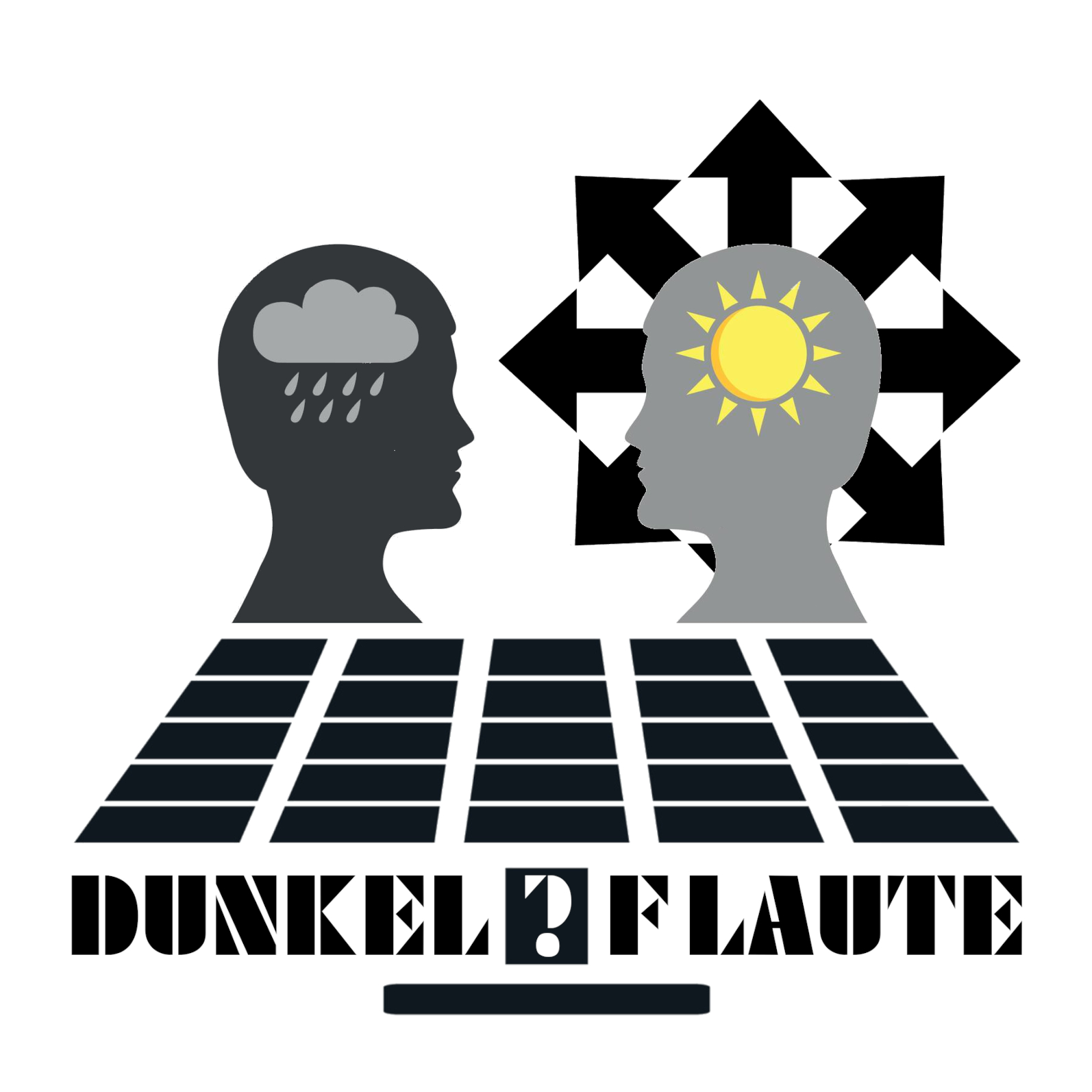
Stephan Groß, Dunkelflaute, Berlin, 2025
⇓ Press release (pdf)
⇓ Flyer
⇓ Poster

Fake news relies on fear, anger, and outrage. This is the emotional fuel that drives many to share fake news. Algorithms favor this, so fake news often spreads faster than verified facts. This applies to climate change, energy transition, and transformation as well. How do we expose fake news? How do we set positive examples instead?
Gallery Global 3000 invited artists through a worldwide call to submit their proposals. 17 international artists from Lithuania, Greece, Germany, and the USA have addressed the topic of fake news. The exhibition features graphics, installations, photographs, objects, videos, paintings, and performances.
Jury Team GG3: Tom Albrecht, Stephan Groß, Maria Korporal, Vera Leisibach, John Maibohm, Andrea Striesova
Curator: Tom Albrecht
Co-curator: Katja Hock
Program
Vernissage Fri., 4.7.2025, 7 pm
Welcome by Tom Albrecht, introduction to the exhibition by Katja Hock, Blues Kitchen play blues and folk with vocals and guitars.
Artist:Inside talk Fri. 11.7., 7 p.m.
Artists from the exhibition talk about their works on site and online with guests. Moderation Katja Hock
Happy Fake News Party Fri. 25.7., 7 pm
Humor dispels rumors. Guests collect fake news and sort it according to strength and subversion. Action by Tom Albrecht.
Simply plug in: Solar power for tenants and owners. Fri. August 8, 7 PM,
Lecture with discussion. M.Sc. Hai Yen Le, SolarZentrum Berlin. Law, financing, profitability, examples, advice.
Finissage, Performance Fri. August 15, 7 PM.
Anna Staffel: FAKTEN ATTRAKTOR – an approach to reality or what Mandelbrot would have thought
Here you will find a brief description of the individual artworks
Thomas Behling identifies those responsible for German fake news in his graphic “Die Alternative für Deutschland ist blau.” from 2021. A map of Germany, colored in black-red-gold, slowly sinks into the blue of the flat background.
Tom Lane questions the media narrative of the USA with “Bad Day” from 2025. Lane’s AI video transports the most powerful man in the USA into a never-ending soap opera that portrays Trump as flawed and ordinary.
Alexander Rommel also references the Trump administration. In a digital painting, a fictional oil island burns fiercely.
Slovenian artist Tajda Stiplovšek-Jug presents a three-part installation work inspired by former Slovenian right-wing Prime Minister Janez Janša, who denies climate change. The artist depicts a fictional digital market that trades snow as a luxury commodity.
Carsten Brock plays with the names of major social media players like X, formerly Twitter, YouTube, and Facebook in “Big Tech,” exposing these channels as co-responsible for spreading fake news.
In “Everything is True, Nothing is False; Everything is False, Nothing is True,” Romanian artist Diana Păun explores language as a tool of societal power. Using sculpture, sound, text, and photo collage, she examines common disinformation, propaganda, and conspiracy theories.
Stefanie Raetsch‘s three-part photo series “Kunst am Baum – die Natur lügt nicht” critiques the food industry: Small information signs can be discovered on different tree barks from Senegal. They offer ingredient descriptions composed of an overwhelming flood of terms such as “gluten-free” or “salt-free” as is typical for processed products.
Every time a black object approaches the person in Lorina Speder‘s video, a “no” falls. The two-minute work “Nein” makes clear with its straightforward and simple visual language that only through active opposition can fake news be denied a platform.
Vera Leisibach offers a playful solution for dealing with the flood of fake news with “Wahrnehmung 2.0 Magische Medien gegen Fake News.” Media literacy as an invaluable asset—a gilded umbrella, glasses, and headphones protect and sharpen the ability to see the truth.
Merit Fakler presents the video work “It’s not a Perpetuum mobile”: plastic cups and bottles floating in space, shimmering in neon colors. The words “fake” or “bio” are repeatedly displayed in the image space.
The three-minute video work “Stringing You Along” by Emily Wisniewski from 2019 depicts the interconnected web of human development, agriculture, and the water cycle.
Stephan Groß is represented with two graphics on solar energy: “Dunkelflaute” and “Hellbriser: der die Hellbrise bringt.”
With “Dear Earth,” a two-part photograph and an installation, Šarūnė Kalininaitė establishes a conversation with the earth.
Norbert Hillwig addresses the attempted clearing of 200 hectares of holm oak forest in Apulia by Porsche in his sculptural work “WALD STATT ASPHALT. Denkmal für die Rettung des Steineichenwaldes” from 2025.
In her painting “Zukunft ist Jetzt,” Nora Zang abolishes fake news.
Anna Staffel‘s performance “FAKTEN ATTRAKTOR – chaotische Annäherung an die Wirklichkeit oder was Mandelbrot gedacht hätte” uses her own voice and objects that she develops with randomly selected items and texts from the moment of performance.
Tom Albrecht invites visitors to a Happy Fakenews Party, collects fake news from the audience, and writes them down for all to see. After the audience evaluates the strength and quality of each piece of fake news, a winner is crowned.